Over the last year, Singer-songwriter Paris Paloma and director Georgie Cowan-Turner have created videos pointing a mirror to patriarchy, now they complete their anthology

The most radical act a woman can achieve, in art or otherwise, is to see herself without the misogynistic lens we’ve been conditioned to observe ourselves through. In her 1993 novel The Robber Bride, Canadian writer Margaret Atwood refers to this as women being their own voyeurs. Two decades earlier, John Berger stated that in Western art “women watch themselves being looked at.” That’s precisely the idea that singer-songwriter Paris Paloma and director Georgie Cowan-Turner dislodge in their trilogy of music videos for Paloma’s new album, The Fatal Flaw. Rather than simply challenging the male gaze, they have built a world where patriarchal fragility reflects back on itself.
When I sit down to talk with Paloma and Cowan-Turner about their collaboration, they energetically deep dive into each video. They finish each other’s references, clearly on the same page. “We really understand each other in terms of what we’re trying to convey,” Paloma pinpoints, “Georgie has such a vision, her references are always so emotionally targeted.” Cowan-Turner smiles at the compliment, “It’s because I know Paris is so good at doing this,” she responds.
The anthology, as Paloma calls it, started with “Good Boy”, a folktale starring Tom Blyth, released last September. “Good Girl”, a gothic horror starring Richard Armitage, followed in January. Now, closing the trilogy, comes “Silhouette on the Hill”, a western starring Ewan Mitchell. These actors have track records in character building, and clearly chisel their screen muses’ motivations seriously, not as mere music video cameos. “Asking these three men to consider how they physically embody this crumbling masculinity gave them something almost feral to work with,” Georgie reflects.
Each video drops the villain into an archetype-filled, male-coded genre, then subverts it from within. “It’s genres where women are used to being throwaway; I always think, ‘Where the fuck is the rest of the story?’” Paloma declares. “When you actually look at the way people are filmed within genres, you realise the sexism inherent in it,” Cowan-Turner continues. “That’s why our films end up going gothic halfway through.” The gothic genre has, since its inception in the 18th century, been dominated by women and used as a mode through which they have examined the dangers they face, Ann Radcliffe’s The Mysteries of Udolpho and Mary Shelley’s Frankenstein being two cornerstone examples.
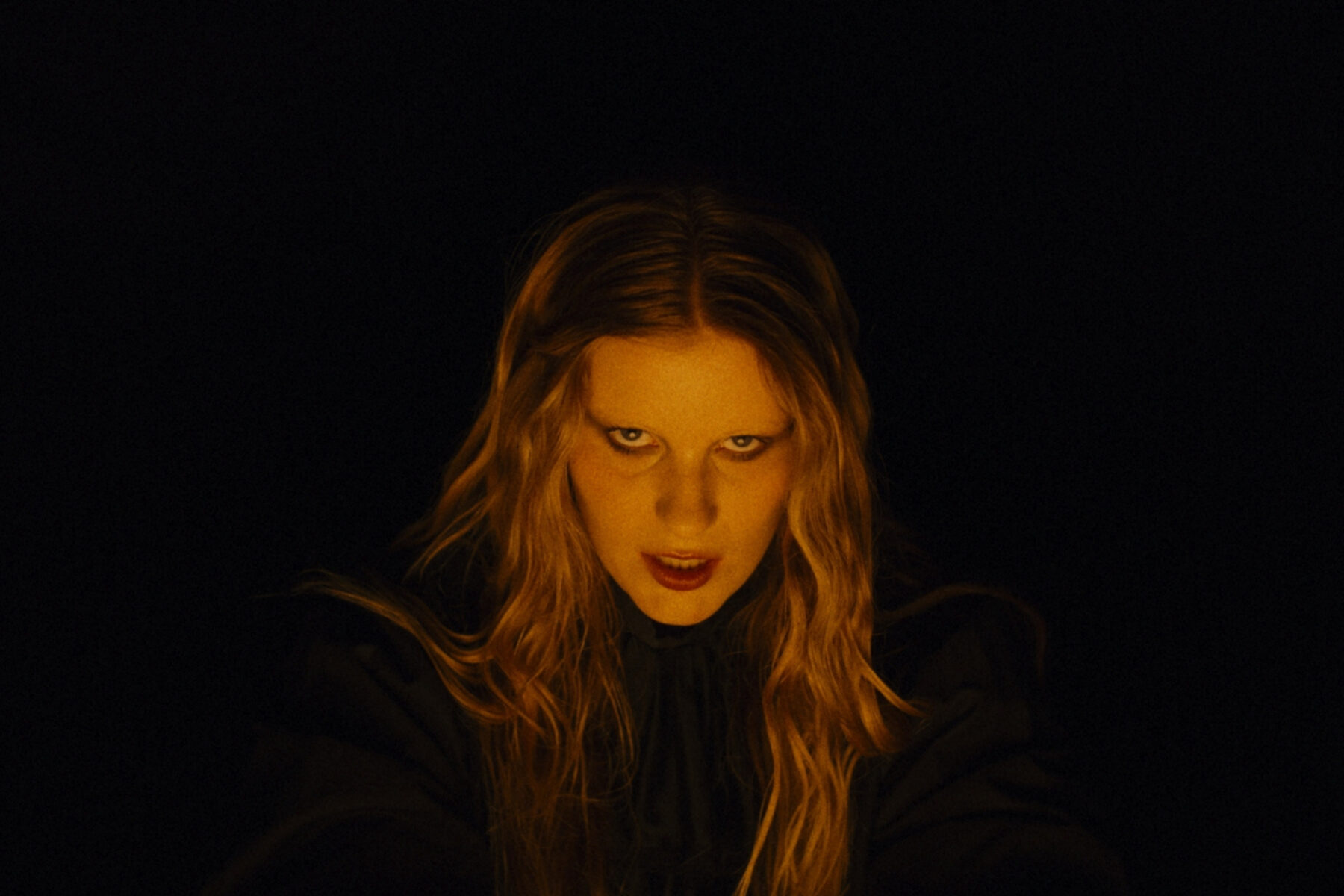
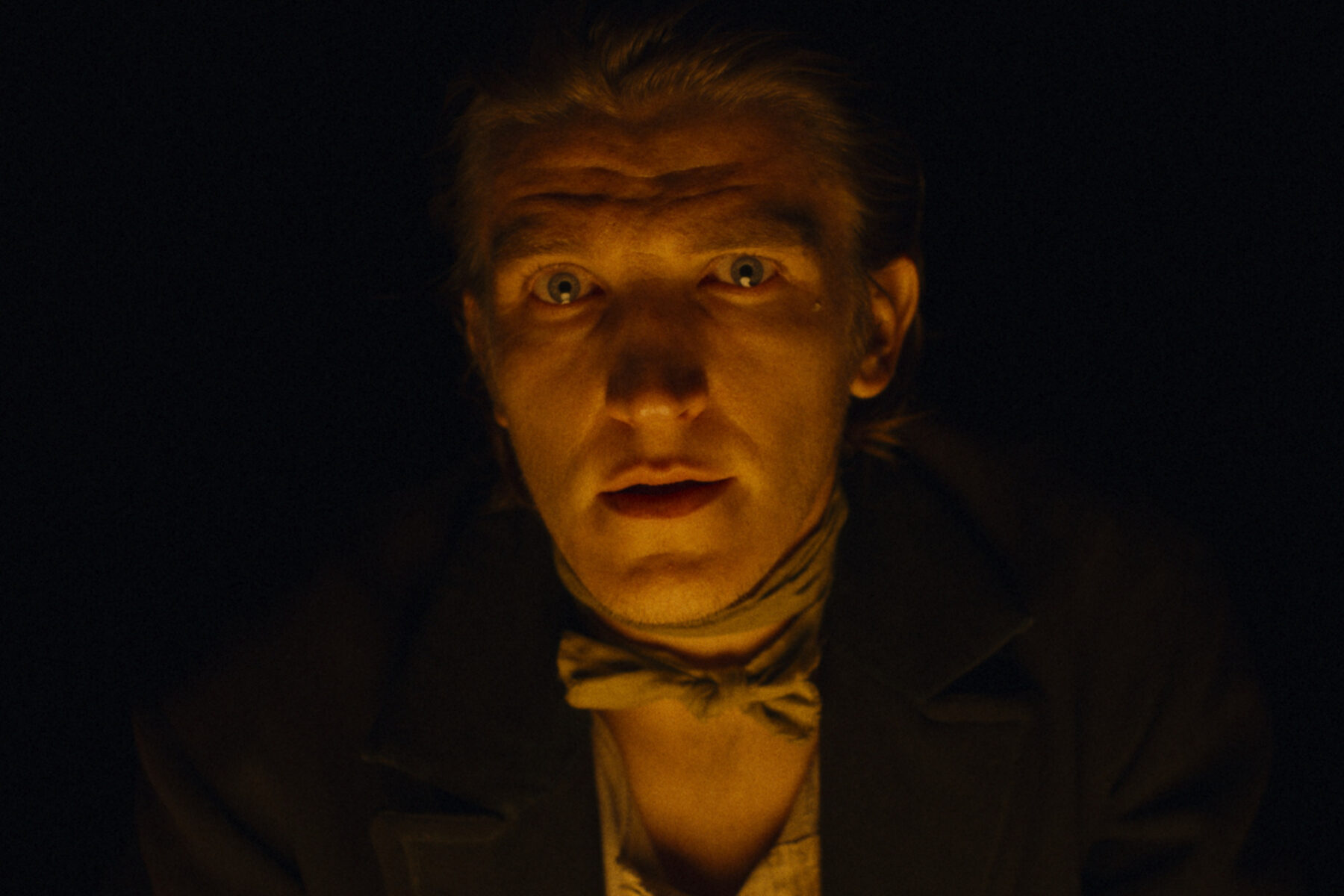
The villain in “Good Boy” is an everyman archetype – he’s a cog in a machine, a boy upholding the patriarchal system in a self-aggrandising bid. Paloma plays two roles: the oppressed everywoman and ‘The Patriarchy’ itself, blurring the lines of power. For the latter, her face is painted white, her performance inspired by Kathryn Hunter’s witch in The Tragedy of Macbeth. Cowan-Turner shot it in 4:3, “to show him trapped in this world,” which echoes Mad Men office machismo and Twin Peaks masculinity, which often comes out in surreal, feral ways, before veering fully into folktale, leaning into specific motifs (men as dogs in a collar, staircases of power leading nowhere).
Blyth – who delivered a fierce depiction of toxic masculinity in this year’s excellent prison drama Wasteman – shines in the moments where fear turns to brutality, “Tom was really good at flashing into anger,” Cowan-Turner says. “I’d had a dream of him crawling across the boardroom table, barking at the camera, and on set he completely got it.” It’s true, as the ‘The Patriarchy’ whispers in his ear, “Good boy, you’re working exactly as intended,” he runs wild with the dog-like performance. The effect is both scary and funny – satire poking at the ridiculousness of his weakness. “It’s actually the most submissive thing in the world to mindlessly dedicate yourself to this higher power,” Paloma explains.
The second installment, “Good Girl”, is the anthology’s clearest subversion. Riffing on the Pygmalion myth and Jean Cocteau’s The Blood of a Poet, it follows an artist sculpting his perfect woman, played by Paloma, who unbeknownst to him suddenly comes to life. “I literally couldn’t see. It made me feel like I’d just been born,” Paloma laughs, recalling the shoot. The physicality of her performance is impressive, and explores a familiar trope: the naive, virginal woman who falls for the man who teaches her the world. Except here, she learns to be a woman on her own terms, moving in typically grotesque ways through the labyrinth of the artist’s house, finally taking a bite of an apple because, of course, the original sin of woman is eating (“Heaven is a fed girl, somebody’s got to, somebody’s got to,” the song mantras).

Paloma’s references were artists like Rodin and Picasso, and casting Armitage was a no-brainer. “He brought this great eerie, loving quality,” Paloma reflects, “because that’s how male artists see this dynamic […] they think they’re putting [their muse] on a pedestal, but it’s actually a really rigid form of disservice to the women they’re pursuing and mining for inspiration.” The violence of that pursuit culminates in a Peeping Tom-style ending, except the camera that kills women, metaphorically and literally, is seized by Paloma’s character and turned back on the artist.
The anthology’s finale, “Silhouette on the Hill”, released alongside the album, is a western that curdles into gothic horror. The villain is the most outwardly sadistic of the three. The video opens on his eyes locked on the camera, a shot Cowan-Turner uses to trap the audience in his gaze, before we realise he’s stabbing Paloma’s character and throwing her bloodied body into a river in an Ophelia-like image; she then haunts him for the rest of the film, riding a horse like a dark vigilante, not allowing him to escape the horror of what he’s done.
Mitchell’s performance as this desperado character is as scary as it is captivating, “It was such a delight,” Paloma says of working with him, “for someone to take it so sensitively and care so much about the layers of the character.” The climax comes as he crawls through mud, begging the ghost of Paloma. “Don’t want a part of your redemption arc,” her vocals drop into a calm, strong chant. “It’s this amazing moment in the song, almost like someone praying,” Cowan-Turner says. “I wanted it to be the groveling man trying to excuse the inexcusable. He’s no longer allowed to live in his nasty, shatterable world.”
The song is one the messiest points emotionally in an album full of repair and reconciliation. Paloma wrote it amidst heartbreak about turning the people who wronged us into monsters for self-preservation. “I was thinking about vanishing from the life of somebody who would otherwise want access to me,” she says, “It’s this thing of men breaking things and not fixing them […]. This is me rejecting any responsibility to handhold and do anything other than heal myself.” There is, in the end, no redemption arc: Mitchell’s villain is caught by Paloma’s vigilante, dying with one mythical stab of a dagger, as she locks her eyes on the camera and, like him, we’re now under her gaze. It’s a poetic ending to the saga: welcome to her world.

Paloma and Cowan-Turner built a fully fleshed out story in each video, a genuine feat pairing Paloma’s writing and vision with Cowan-Turner’s eye and cinematic storytelling. None of it, by their own account, felt heavy to create. They may be meticulous, but they’re not overly serious or dictatorial. “We’re making something we find really exciting and fun,” Cowan-Turner says. “You can watch these as films and take what you will, but we’re not preaching.” Paloma nods in agreement before adding, “There are themes that resonate strongly for every woman, but it’s also just a music video, and it’s fun to make something that comes from my psychology.”
Paloma spent years feeling like she didn’t have a voice at all (“so small and so silent in a world full of such violent noise towards women”). Now, as we hang up the call, she’s heading off to play Leeds festival, a week before releasing her sophomore album. She has found her voice, is working to build herself as the woman she wants to be without being surveilled by the mirror we keep forcing women in front of. In the videos, as this reflection turns, the men’s first instinct is to enact violence before succumbing to the horror of being watched. Their fragility is precisely what turns them vicious. “If it wasn’t a fragile system, [patriarchy] wouldn’t need so much shouting and screaming to uphold it,” Paloma concludes. The anthology refuses to let them uphold it, trapping them within the reflection. It’s a breath of fresh air to have two women at the helm of art that asks men to sit in the discomfort of their own violence. Somebody’s got to.
Words – Natalia Albin
Photography – Phoebe Fox


